
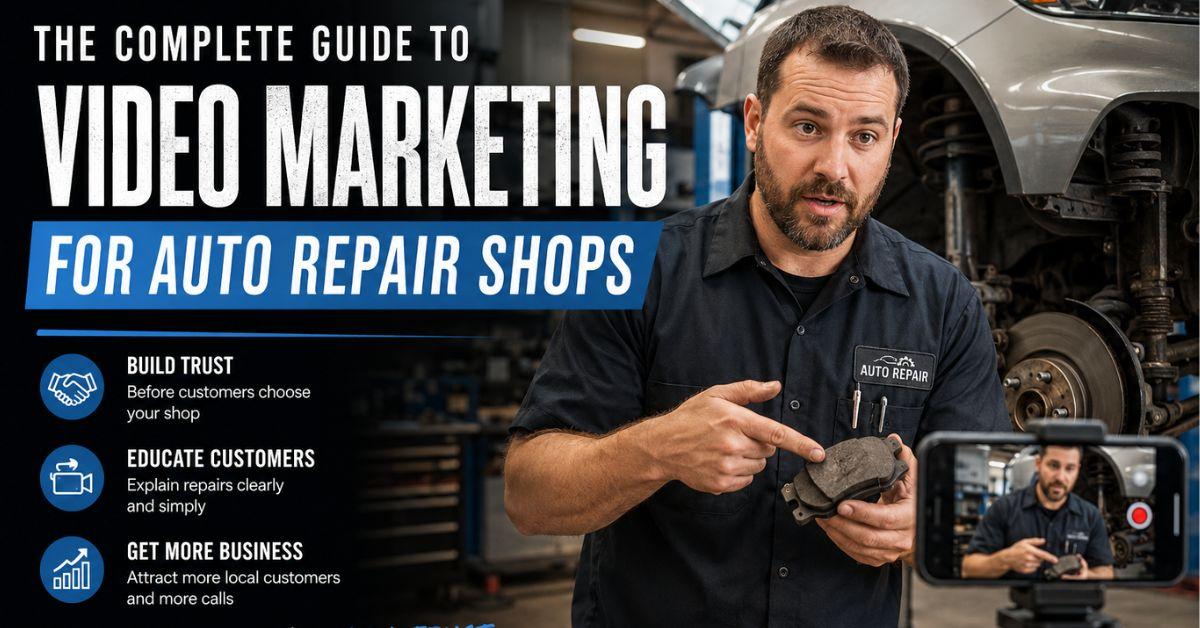
1. Why Video Is One of the Best Marketing Tools for Your Shop
If you run an auto repair shop, here is a hard truth.
The shops getting more calls and more loyal customers are not always the best mechanics. They are the shops people know and trust before they ever need a repair.
Today, trust is built online.
A customer with a strange engine noise or a flashing warning light isn’t flipping through the phone book. They’re searching Google, watching YouTube, scrolling Facebook, or browsing Instagram, looking for answers.
If your shop is the one explaining the problem clearly, you’ve already won half the battle.
You don’t need expensive cameras or a marketing team. You need your phone, your knowledge, and a willingness to help people understand their vehicles.
Let’s look at how to make that happen.
2. Why Video Works for Auto Repair Shops
Most people don’t understand cars.
They understand how their car feels.
They hear a noise. They notice a vibration. A warning light comes on. Suddenly they’re worried about cost, safety, and whether they can trust the shop they choose.
This is where video changes everything.
Instead of simply telling customers what’s wrong, you can show them.
One great example is Dave’s Auto Center. Their videos don’t focus on selling repairs. They focus on helping customers understand what the technicians are seeing. They explain the diagnosis, show the worn parts, discuss the customer’s options, and communicate everything in plain language.
That approach accomplishes three things:
- Builds trust before the customer visits
- Shows your expertise without bragging
- Makes complex repairs easy to understand
When customers feel informed, they’re far more likely to choose your shop.
3. Seven Types of Videos Every Auto Repair Shop Should Create
You don’t need dozens of content ideas.
You only need a few formats that consistently answer customer questions.
3.1. Repair Walkthroughs
Show a real repair or diagnosis.
Explain:
- What the problem is
- What caused it
- How you’re fixing it
- What happens if it’s ignored
These videos establish your expertise while educating potential customers.
3.2. Quick Maintenance Tips
Simple topics work best.
Examples include:
- How to tell if your tires are worn
- What does a check engine light mean
- Why does your steering wheel shake
- Signs your battery may be failing
- What fluid leaks can tell you
These videos are perfect for Facebook Reels, Instagram Reels, TikTok, and YouTube Shorts.
3.3. Customer Education Videos
Many repairs seem expensive because customers don’t understand what’s involved.
Use video to explain:
- Why is a repair necessary
- What happens if it’s delayed
- The different repair options available
Education reduces objections.
3.4. Shop Tours
Give customers a look behind the scenes.
Show:
- Your technicians
- Equipment
- Clean work areas
- Daily operations
People trust businesses they feel familiar with.
3.5. Customer Testimonials
Ask satisfied customers to share:
- What problem did they have
- Why did they choose your shop
- Their experience
- The outcome
Nothing builds credibility like happy customers.
3.6. Meet the Team
Introduce your technicians.
Share:
- Their experience
- Certifications
- Favorite vehicles
- Why do they enjoy helping customers
People buy from people.
3.7. Frequently Asked Questions
Turn everyday customer questions into videos.
If customers keep asking the same questions, chances are others are searching for the answers online. Creating videos that address these common questions builds trust, showcases your expertise, and increases your visibility in search results.
Examples:
- How long do brakes last?
- Should I replace all four tires?
- Can I drive with a check engine light?
- Why is my AC blowing warm air?
Quick Takeaway
You don’t need viral videos.
You need helpful videos.
4. Equipment You Actually Need
Forget expensive cameras.
Customers don’t care what camera you use.
They care whether they understand the repair.
Start with:
- A modern smartphone
- A simple tripod
- A clip-on microphone
- Good lighting from your shop or an open bay door
That’s enough.
If people can clearly see the problem and hear your explanation, your equipment has done its job.
5. Planning Your Videos
Don’t script every word.
Instead, use a simple four-step framework.
5.1. Start with the problem
“What causes this noise?”
5.2. Show the issue
Point to the worn part or symptom.
5.3. Explain it simply
Avoid technical language whenever possible.
5.4. Explain why it matters
Help viewers understand the consequences of waiting.
Before filming, write down three or four bullet points.
That’s all you need.
Pro Tip
Every question your customers ask is another video idea.
Keep a running list at the service desk.
6. Turn One Video Into Five Pieces of Content
Don’t create new content for every platform.
Reuse the same video.
One repair explanation can become:
- A YouTube video
- Facebook Reel
- Instagram Reel
- TikTok video
- Website resource
- Email response to customers
One recording can work for your business for months.
7. How to Know If Your Videos Are Working
Don’t focus on views.
Focus on business results.
Watch for:
- More phone calls
- More website visits
- More appointment requests
- Customers mentioning your videos
- More engagement on social media
One customer saying, “I watched your video before calling,” is worth far more than thousands of random views.
8. Common Mistakes to Avoid
Trying to Be Perfect
Customers want honest explanations, not Hollywood productions.
Start recording.
Using Too Much Technical Language
Speak like you’re talking to a customer standing beside the vehicle.
Not another technician.
Making Every Video a Sales Pitch
Teach first.
Sell second.
Helpful videos outperform promotional videos every time.
Posting Once and Giving Up
Video marketing works through consistency.
One helpful video every week is far better than ten videos followed by months of silence.
Ignoring Customer Questions
The comments section is full of future content ideas.
Answer those questions with another video.
Repeat.
Shop Owner Checklist
Before publishing your next video, ask yourself:
☐ Did I solve a real customer problem?
☐ Is the explanation easy to understand?
☐ Can viewers clearly see the issue?
☐ Did I explain why it matters?
☐ Did I post it on multiple platforms?
If you answered yes to each question, you’re already ahead of most repair shops.
Conclusion
Video is not about becoming an influencer.
It’s about becoming the shop people trust.
Every video answers a question.
Every explanation builds credibility.
Every helpful tip makes your shop more familiar before a customer ever walks through the door.
The best part is that you already have everything you need.
Real repairs.
Real experience.
Real stories.
Start simple.
Press record.
Help one customer at a time through video.
Do that consistently, and your videos will keep building trust, attracting customers, and growing your business long after you’ve finished recording.
Need Help Creating Video Marketing for Your Auto Repair Shop?
Creating videos consistently can feel overwhelming when you’re busy running a shop. Between managing technicians, ordering parts, and serving customers, marketing often gets pushed to the bottom of the list.
At Gray Coyote Digital, we help auto repair shops turn their everyday expertise into marketing that builds trust and generates more calls. Whether you need help planning video topics, developing a content strategy, optimizing videos for YouTube and Google, or creating a complete digital marketing plan, our team can help you get the most from every video you produce.
If you’re ready to use video to grow your shop, schedule a free strategy call with Gray Coyote Digital. We’ll show you practical ways to turn the knowledge you already have into content that attracts more customers and helps your business stand out online.