
How To Use Video In Your Auto Repair Shop Marketing
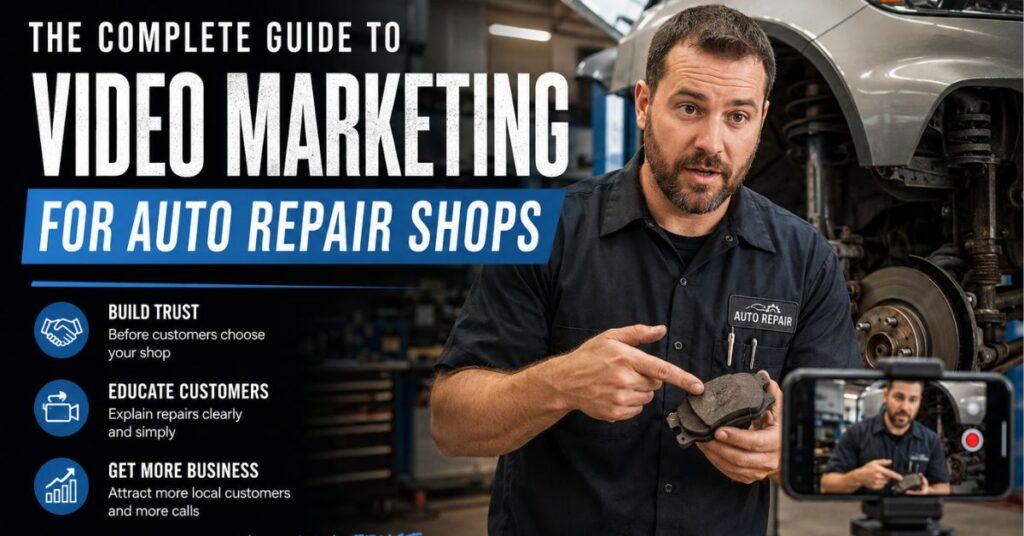
1. Why Video Is One of the Best Marketing Tools for Your Shop If you run an auto repair shop, here is a hard truth. The shops getting more calls and more loyal customers are not always the best mechanics. They are the shops people know and trust before they ever need a repair. Today, trust is built online. A customer with a strange engine noise or a flashing warning light isn’t flipping through the phone book. They’re searching Google, watching YouTube, scrolling Facebook, or browsing Instagram, looking for answers. If your shop is the one explaining the problem clearly, you’ve already won half the battle. You don’t need expensive cameras or a marketing team. You need your phone, your knowledge, and a willingness to help people understand their vehicles. Let’s look at how to make that happen. 2. Why Video Works for Auto Repair Shops Most people don’t understand cars. They understand how their car feels. They hear a noise. They notice a vibration. A warning light comes on. Suddenly they’re worried about cost, safety, and whether they can trust the shop they choose. This is where video changes everything. Instead of simply telling customers what’s wrong, you can show them. One great example is Dave’s Auto Center. Their videos don’t focus on selling repairs. They focus on helping customers understand what the technicians are seeing. They explain the diagnosis, show the worn parts, discuss the customer’s options, and communicate everything in plain language. https://youtu.be/o8ixg87X8AM?si=5CYF1GQCcBt96N9u That approach accomplishes three things: Builds trust before the customer visits Shows your expertise without bragging Makes complex repairs easy to understand When customers feel informed, they’re far more likely to choose your shop. 3. Seven Types of Videos Every Auto Repair Shop Should Create You don’t need dozens of content ideas. You only need a few formats that consistently answer customer questions. 3.1. Repair Walkthroughs Show a real repair or diagnosis. Explain: What the problem is What caused it How you’re fixing it What happens if it’s ignored These videos establish your expertise while educating potential customers. 3.2. Quick Maintenance Tips Simple topics work best. Examples include: How to tell if your tires are worn What does a check engine light mean Why does your steering wheel shake Signs your battery may be failing What fluid leaks can tell you These videos are perfect for Facebook Reels, Instagram Reels, TikTok, and YouTube Shorts. 3.3. Customer Education Videos Many repairs seem expensive because customers don’t understand what’s involved. Use video to explain: Why is a repair necessary What happens if it’s delayed The different repair options available Education reduces objections. 3.4. Shop Tours Give customers a look behind the scenes. Show: Your technicians Equipment Clean work areas Daily operations People trust businesses they feel familiar with. 3.5. Customer Testimonials Ask satisfied customers to share: What problem did they have Why did they choose your shop Their experience The outcome Nothing builds credibility like happy customers. 3.6. Meet the Team Introduce your technicians. Share: Their experience Certifications Favorite vehicles Why do they enjoy helping customers People buy from people. 3.7. Frequently Asked Questions Turn everyday customer questions into videos. If customers keep asking the same questions, chances are others are searching for the answers online. Creating videos that address these common questions builds trust, showcases your expertise, and increases your visibility in search results. Examples: How long do brakes last? Should I replace all four tires? Can I drive with a check engine light? Why is my AC blowing warm air? Quick Takeaway You don’t need viral videos. You need helpful videos. 4. Equipment You Actually Need Forget expensive cameras. Customers don’t care what camera you use. They care whether they understand the repair. Start with: A modern smartphone A simple tripod A clip-on microphone Good lighting from your shop or an open bay door That’s enough. If people can clearly see the problem and hear your explanation, your equipment has done its job. 5. Planning Your Videos Don’t script every word. Instead, use a simple four-step framework. 5.1. Start with the problem “What causes this noise?” 5.2. Show the issue Point to the worn part or symptom. 5.3. Explain it simply Avoid technical language whenever possible. 5.4. Explain why it matters Help viewers understand the consequences of waiting. Before filming, write down three or four bullet points. That’s all you need. Pro Tip Every question your customers ask is another video idea. Keep a running list at the service desk. 6. Turn One Video Into Five Pieces of Content Don’t create new content for every platform. Reuse the same video. One repair explanation can become: A YouTube video Facebook Reel Instagram Reel TikTok video Website resource Email response to customers One recording can work for your business for months. 7. How to Know If Your Videos Are Working Don’t focus on views. Focus on business results. Watch for: More phone calls More website visits More appointment requests Customers mentioning your videos More engagement on social media One customer saying, “I watched your video before calling,” is worth far more than thousands of random views. 8. Common Mistakes to Avoid Trying to Be Perfect Customers want honest explanations, not Hollywood productions. Start recording. Using Too Much Technical Language Speak like you’re talking to a customer standing beside the vehicle. Not another technician. Making Every Video a Sales Pitch Teach first. Sell second. Helpful videos outperform promotional videos every time. Posting Once and Giving Up Video marketing works through consistency. One helpful video every week is far better than ten videos followed by months of silence. Ignoring Customer Questions The comments section is full of future content ideas. Answer those questions with another video. Repeat. Shop Owner Checklist Before publishing your next video, ask yourself: ☐ Did I solve a real customer problem? ☐ Is the explanation easy to understand? ☐ Can viewers clearly see the issue? ☐ Did I explain why it matters? ☐ Did I post it on multiple platforms? If you answered yes to
Auto Glass Marketing Ideas for Local Shops
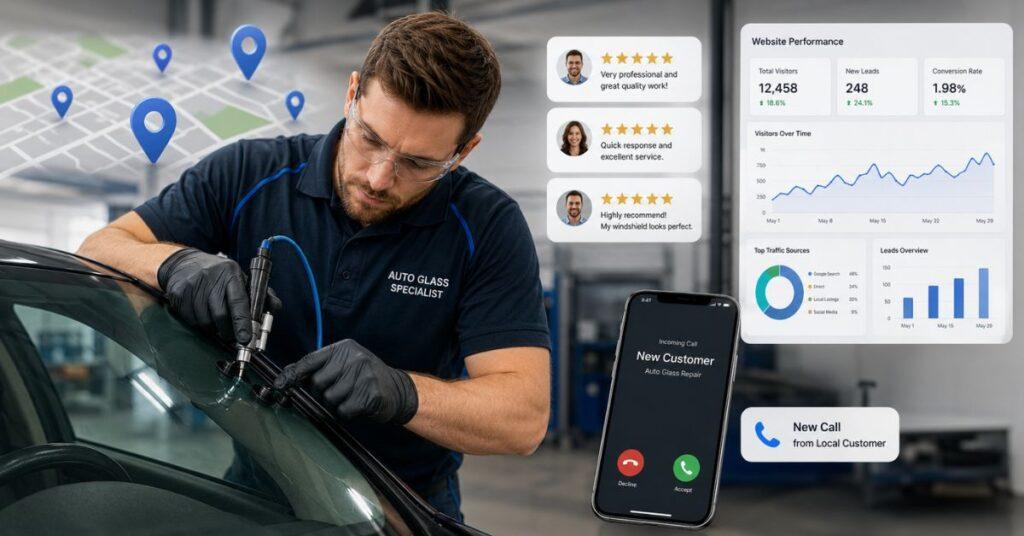
If you run an auto glass shop, you already know the truth: customers don’t browse — they search when they need you now. That is why the right auto glass repair marketing ideas can help your business show up at the exact moment local drivers are ready to call. Someone hears a crack driving down the highway, a rock chips the windshield during rush hour, or a shattered side window leaves the car exposed. In most cases, people are not researching for weeks before making a decision. They pull their phone, put in “auto glass repair near me,” and call the first trusted company. That moment matters more than most shop owners realize. While you may do great work in the shop, you may be struggling to get calls because your business is hard to find online or your website fails to provide the information your customer was seeking. The good news is that you don’t need an over-the-top marketing campaign. The guide below is designed to turn searches into calls and calls into booked jobs for businesses like yours. Why Marketing Matters for Auto Glass Businesses Auto glass repair is one of the most competitive local service industries online. Customers search with a high urgency, looking for windshield repairs near them and available the same day. They are also typically searching on their phone, ready to make a decision within minutes. When your customers search for your auto glass shop’s services, one of two things happen. They don’t see you because your shop is not in the top three results on the Local Three Pack or, worse, not on the first page. They find you, but they don’t make the call because your website is slow, difficult to navigate, not mobile friendly, or missing the trust signals they need to make a call. The good news? With the right strategy, you will get better traffic to your business that leads to better conversion. 1. Build a Trustworthy Brand Most people decide whether they trust a business before they ever speak to someone on the phone. Adding real customer testimonials, photos of completed repairs, and details about your process reduce hesitation. Mentioning same-day service, mobile windshield replacement services, or insurance windshield repair also reassures customers that you can handle urgent situations without making their day more stressful. A strong brand doesn’t mean expensive designs or flashy ads. It just means making customers feel confident that your shop can solve their problems quickly and professionally. 2. Review & Reputation Strategy Reviews play two important roles for the auto glass businesses. First, they help your Google rankings. Second, they help customers choose your company over a competitor. Build a review system that is simple and consistent. Automate the process through text messages because customers are more likely to leave reviews when it takes less than a minute. You should also focus heavily on Google reviews since, as we stated, they influence your ranking and customers’ trust. Responding to every review, good or bad, improves your reputation because future customers see that your business is active and responsive. Over time, reviews could become one of your strongest conversion tools. 3. Local SEO is Your #1 Lead Driver For most auto glass businesses, local SEO generates the highest-quality and most consistent leads. The businesses that appear first in local search results usually win the majority of the calls. A resilient local SEO strategy starts with understanding how customers search. Most searches combine a service with either a city name or a phrase like “near me.” That means your website should incorporate keywords, such as: Auto glass repair Windshield repair Same day windshield repair Mobile auto glass repair Windshield replacement Car window repair But don’t just include them somewhere on the page. These keywords should be appearing throughout your page titles, service pages, headings, and meta descriptions in a way that reads naturally to your customers. Consistency is also highly important. Your business name, address, and phone number should match everywhere online. The smallest inconsistencies can weaken your local SEO performance over time. 4. The Hidden Power of Local Pages One of the biggest opportunities many auto glass repair shops miss is creating separate pages for each service and location combination. Instead of trying to rank one generic home page for every location, you can create pages like: Windshield Repair in Houston Auto Glass Repair in Katy Windshield Replacement in Sugar Land The most essential part of this strategy is to make every location page unique. Mention local neighborhoods, roads, or landmarks naturally instead of copying and pasting the same content. Customers notice when pages feel generic and so does Google. 5. A Website Built for Urgent Decisions As we established, your customers are not browsing casually. That means your website should guide visitors toward one simple action: contacting your business. Many auto glass websites inadvertently create friction by overloading pages with unnecessary text, complicating navigation, or having forms asking for too much information. When your customer needs urgent windshield repair, extra steps will reduce conversions. A high-converting website is simple. Your landing page should immediately answer three questions for your customers: Can this company help me? Can they help me quickly? How do I contact them right now? Plus, you have to prioritize a mobile-first design. Most searches for emergency auto glass repair happen on smartphones, so customers are looking to quickly tap a phone number or request a quote. Some other elements on websites that perform well include: Click-to-call button near the top of the page. A visible, clickable phone number at all times. Fast loading speeds under three seconds. Short quote forms asking for only basic information. Clear calls to actions (e.g. “Call now for same-day service”). Some businesses also add click-to-text or live chat options because some customers prefer texting before they fill in forms or call them. The goal is not just more traffic but to make the process of contacting your shop effortless for a stressed customer. 6.
Mobile Mechanic Marketing: How to Get More Calls and Customers
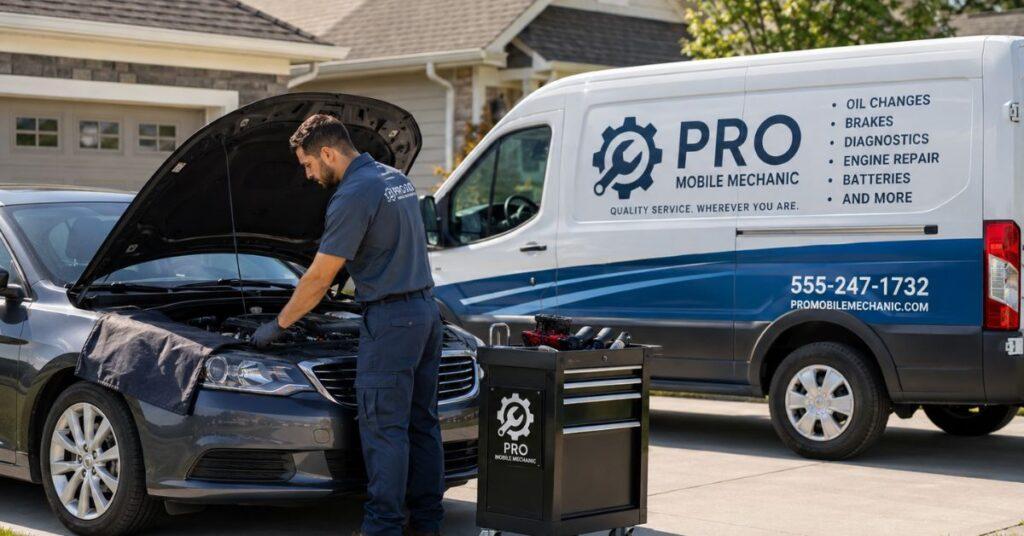
Mobile mechanic marketing is what helps your business get found, earn trust, and turn local searches into booked jobs. Most mobile mechanics do not fail because they are bad at fixing cars. They fail because not enough people know they exist. That is the hard truth. You have the tools. You have the skills. You know engines, brakes, batteries, and diagnostics better than most shops in town. But if your phone does not ring, you do not have business. Running a successful mobile mechanic business isn’t just about expertise. It’s about visibility, trust, and being readily available when customers need help. Because when someone searches “mobile mechanic near me,” they are usually dealing with a problem and looking for help. Their car will not start. Their brakes are making noise. Their battery is dead. Their check engine light is on. They need help now. The business that gets that customer is usually not the best mechanic in the city. It is the mechanic who shows up first on the search results, looks trustworthy, answers fast, and makes it simple to book. That is the game. So, if you want to grow your mobile mechanic business, here is what you need to know from a marketing and advertising point of view. 1. What Is Mobile Mechanic Marketing? A lot of people start with the wrong question. They usually ask: “How do I start a mobile mechanic business?” That is a good question. But the better question is: “How do I get people to call me when they need a mobile mechanic?” That is the question that builds the business. You can buy tools. You can register the business. You can get the insurance needed. You can set up payment systems. All of that matters. But none of it matters much if no one knows you exist. A mobile mechanic business needs a system to generate calls, turn those calls into bookings, and build a loyal customer base. This needs to happen consistently, not just once in a while. That system usually includes: A clearly defined service area. A strong brand. A website that gets traffic and generates calls. A Google Business Profile. Local SEO. Online reviews. Google Ads. Social media. Referral partners. Follow-up systems. This is what turns your skill into a real business. 2. Pick a Clear Service Area One of the biggest mistakes new mobile mechanics make is trying to serve everyone. They say: “I’ll go anywhere.” That sounds flexible, but it can hurt your business. Why? Because travel time kills profit. If you drive 45 minutes to one job, 30 minutes to the next, and an hour to the next one, you are losing time you could have used to book more jobs. So before you spend money on marketing, define your service area. Ask yourself: What cities do I want to serve? What ZIP codes are most profitable? How far am I willing to drive? What areas have the type of customers I want? Are there neighborhoods with more families, commuters, fleets, or rideshare drivers? You do not need to cover the whole metro area in the beginning. Start with a focused area. For example: “Mobile mechanic serving Katy, Cypress, and West Houston.” That is stronger than: “Mobile mechanic serving all of Texas.” A clear service area helps your website, ads, and Google listing work better. It also helps customers know if you can help them. 3. Choose the Right Services to Promote As a mobile mechanic, you may offer a wide range of repair services. But that does not mean you should market every service the same way. Some services are better to promote because customers usually know they need help and are more likely to call right away. Examples of good services to promote include: Battery replacement Brake repair Check engine light diagnostics Oil changes Starter replacement Alternator replacement Pre-purchase inspections No-start diagnostics Fleet maintenance Roadside repair Mobile car inspection Basic maintenance These services work well because customers usually know they need help and are ready to take action. They are not looking for a long explanation. They want quick answers to simple questions like: Can you fix it? Can you come to me? How soon can you get here? How much will it cost? Your marketing should answer those questions as quickly and clearly as possible. It’s best not to make people work hard to understand what you do. Simple sells. 4. Build a Brand People Can Trust A mobile mechanic business has a trust problem. Not because you did anything wrong. But because customers are letting someone come to their home, job, or parking lot to work on their vehicle. That takes trust. So your brand has to make people feel safe. Your brand is not just your logo. Your brand is what people think when they see your business. Do you look professional? Do you look reliable? Do you look like someone they can trust with their car? Your brand should include: A simple business name A clean logo A professional phone number A clear website Branded shirts A clean service vehicle Real photos Clear pricing language Strong reviews Easy ways to contact you Your vehicle matters too. Your work truck or van is a moving billboard. It should clearly show: Business name What you do Phone number Website Main services Service area If someone sees your vehicle for three seconds, they should know you are a mobile mechanic. That is good branding. 5. Create a Website That Gets Calls A mobile mechanic website should do one main thing, which is get people to contact you. It does not need to be fancy. It needs to be clear. A good website tells people: Who you are What you fix Where you work Why they should trust you How to call or book a service Your homepage should have a simple headline. Examples: Mobile Mechanic Services in Houston On-Site Auto Repair When You Need It We Come to You for Diagnostics, Brakes,
Plumber Marketing Tips: How to Get More Leads, Win Jobs & Grow Your Business
When homeowners or businesses need a plumber, they want speed, trust, affordability, and clarity. Your marketing must deliver that at every touchpoint. Too many plumbing businesses rely on word of mouth or one-off tactics. The winners build a marketing system that continuously feeds leads, optimizes costs, and scales. In this guide, you’ll find both proven strategies (used by top plumbing marketers) and fresh angles that many competitors overlook. Use this as your roadmap to test, measure, and improve along the way. 1. Clarify Your Market & Customer Persona Map Your Service Zones Don’t pretend to serve too wide an area if you can’t reliably respond. Define your core service zone (e.g., 20-30 mile radius, or specific zip codes) and prioritize marketing spend there first. Add fringe areas once you saturate the core. Use tools like Google Maps radius tool, heatmaps from past jobs, or GIS software. Build Customer Personas Segment your ideal customers. Example personas: Homeowners in single-family houses who call during emergencies. Landlords or property managers seeking regular maintenance. New builds or remodel clients needing high-end installations. Understand their pain points: burst pipes at midnight, clogged drains, expensive water bills, and suspicion of price gouging. Tailor your messaging to address those fears. Positioning and Messaging Your marketing must clearly answer: Why you? Possible angles: 24/7 response, flat diagnostic fee, green plumbing, warranty guarantees, maintenance plans. Combine that promise with a consistent tone (friendly, authoritative, transparent). Use that messaging in ads, website, trucks, and contracts. 2. Build a High-Conversion Website & On-Page SEO Your website is the hub of your digital marketing. If that fails, nothing else sticks. For a plumber’s business, a website is often the first impression potential customers have of you and your services. If your website fails to engage visitors or rank well in local search results, even the best-quality plumbing won’t get noticed. A high-conversion website is designed to turn visitors into paying customers by clearly presenting your services, pricing, and contact options in a way that builds trust. On-page SEO plays a vital role by optimizing your site with plumbing-specific keywords, service area details, and search-friendly content that helps you show up when locals look for urgent repairs or installations. Understanding these key elements helps you make informed decisions about your online presence, improve your search rankings, and ultimately connect with more customers when they need you most. Core Structural Best Practices Make your phone number, service area, and primary services visible on every page Use a clean layout, legible fonts, and a mobile-responsive design. Load quickly (aim < 3 seconds), compress images, and use caching. Use calls to action (CTAs) such as “Request Service,” “Call Now,” “Schedule Inspection”. Keyword Strategy Research high-intent keywords like “emergency plumber near me,” “pipe leak repair [city],” “drain cleaning cost”. Map each keyword group to its own page (service pages, city/area pages). Use long-form content (blog or FAQ pages) to target informational keywords (e.g., “how to prevent frozen pipes”). Include schema markup: FAQ, HowTo, LocalBusiness. Voice Search & Conversational Queries More people now speak queries (via Alexa, Siri, Google Assistant). Include natural phrasing in content: “Who offers leak repair near me at night?”, “Best plumber open now.” Use question headers (H2, H3) and short answers. Use Trust Signals Display before/after photos. Show certifications, licenses, and insurance. Include customer testimonials with photos. Embed video of real jobs, team introductions. 3. Master Local SEO & Google Business Profile Local SEO is where many plumbing companies win consistently. Optimizing your website and online presence to show up in local search results can drive steady customer calls and leads. One of the most powerful tools for local SEO is your Google Business Profile, which lets your business appear in Google Maps and the local 3-pack, putting you amongst the top results in a list of highly relevant local businesses. Keeping your profile complete and accurate with current contact info, service descriptions, photos, and customer reviews builds trust and helps Google rank your business higher. Regularly updating posts, responding to reviews, and ensuring correct categories also improve your visibility. When local SEO is done right, it puts your plumbing business front and center exactly where and when customers are searching for the services you offer. Google Business Profile (GBP) Optimization Claim and verify your listing. Choose primary and secondary categories (Plumber, Water Heater Repair, Drain Cleaning). Set service area and hours, including emergency or weekend hours. Add attributes (veteran-owned, women-owned, licensed, etc.). Post regularly: tips, offers, before/after photos. Use the Q&A section to preemptively answer queries. Local Citations & NAP Consistency Ensure your business name, address, and phone (NAP) are identical across directories (Yelp, Bing Places, Angi, YellowPages). Inconsistent data confuses Google and reduces ranking power. Create Neighborhood / City Pages If you serve multiple cities or neighborhoods, make pages targeting those (e.g., “Drain Cleaning in Spring, TX”). Write unique content per location — mention landmarks, neighborhoods, service stories. Earn Local Backlinks Sponsor local events, charities, and trade associations. Submit guest posts to neighborhood blogs or real estate sites. Partner with local home improvement blogs, HOA sites, and hardware stores. 4. Use Paid Advertising Strategically Paid ads can accelerate growth, but only if you manage costs and target the right audience. For plumbers, this means focusing ads on specific services like emergency repairs or water heater installations, and honing in on local geographic areas where your ideal customers live. Well-crafted ads with compelling messages and clear calls to action encourage potential customers to contact you immediately. It’s also important to monitor your ad performance regularly, adjusting keywords, budgets, and targeting to avoid wasted spend and maximize return on investment. By using paid ads strategically, you can complement your organic marketing efforts and generate steady leads when you need them the most. Google Local Services Ads (LSA) These show at the top of search results and focus on “near me” searches. They tend to generate high-trust leads because Google screens providers. Keep your profile strong (reviews, background checks) to maintain your ranking. Google